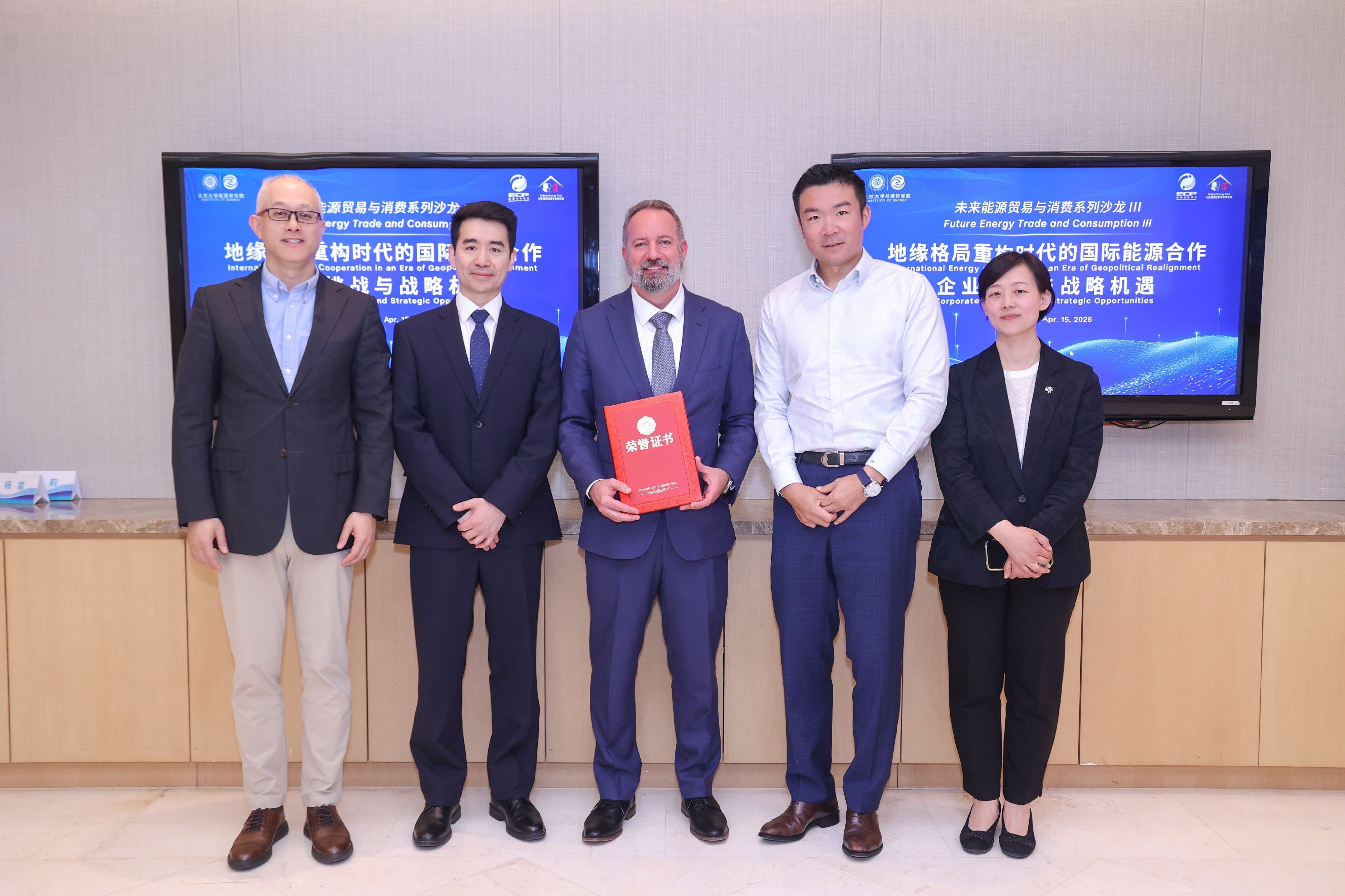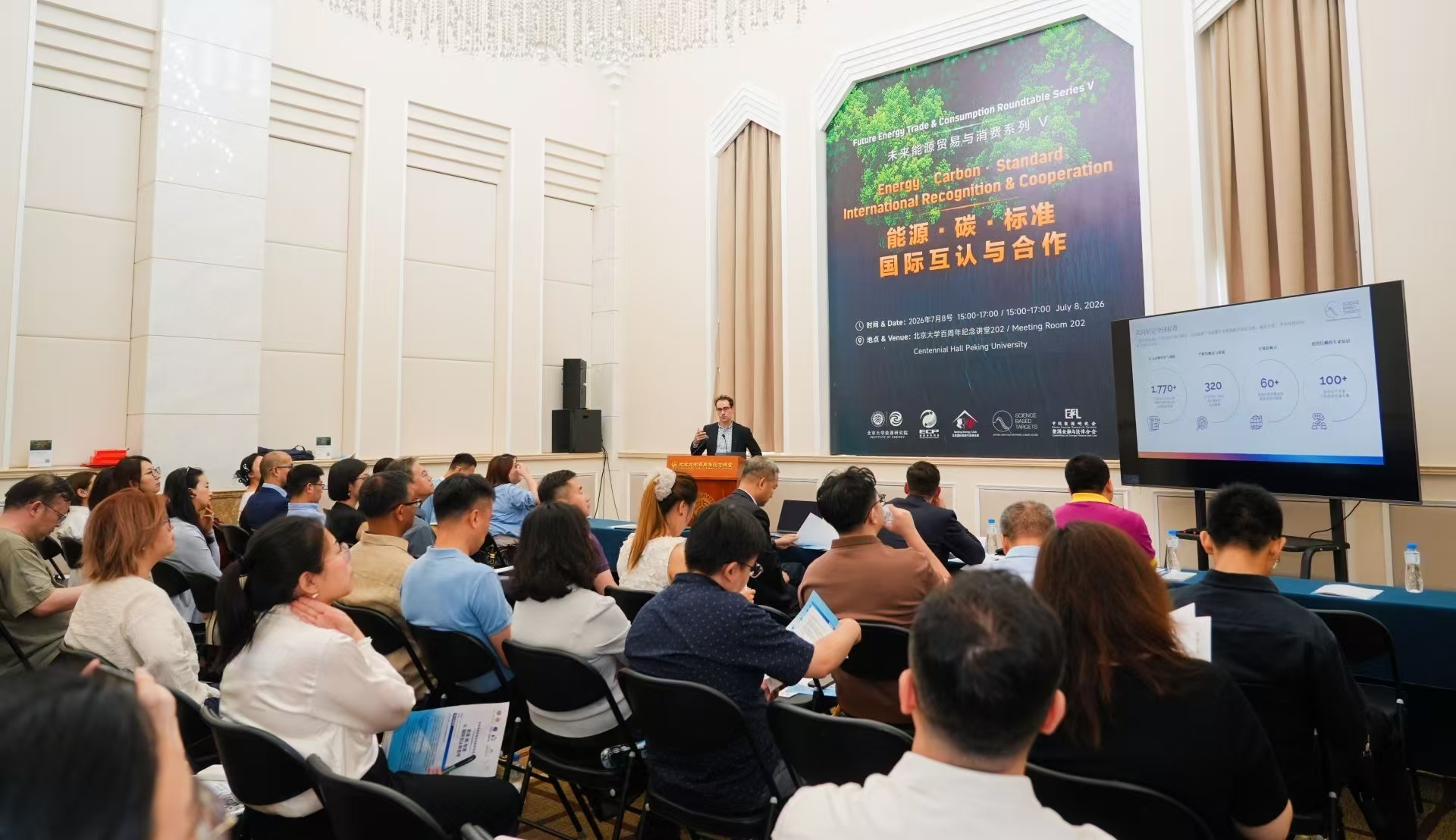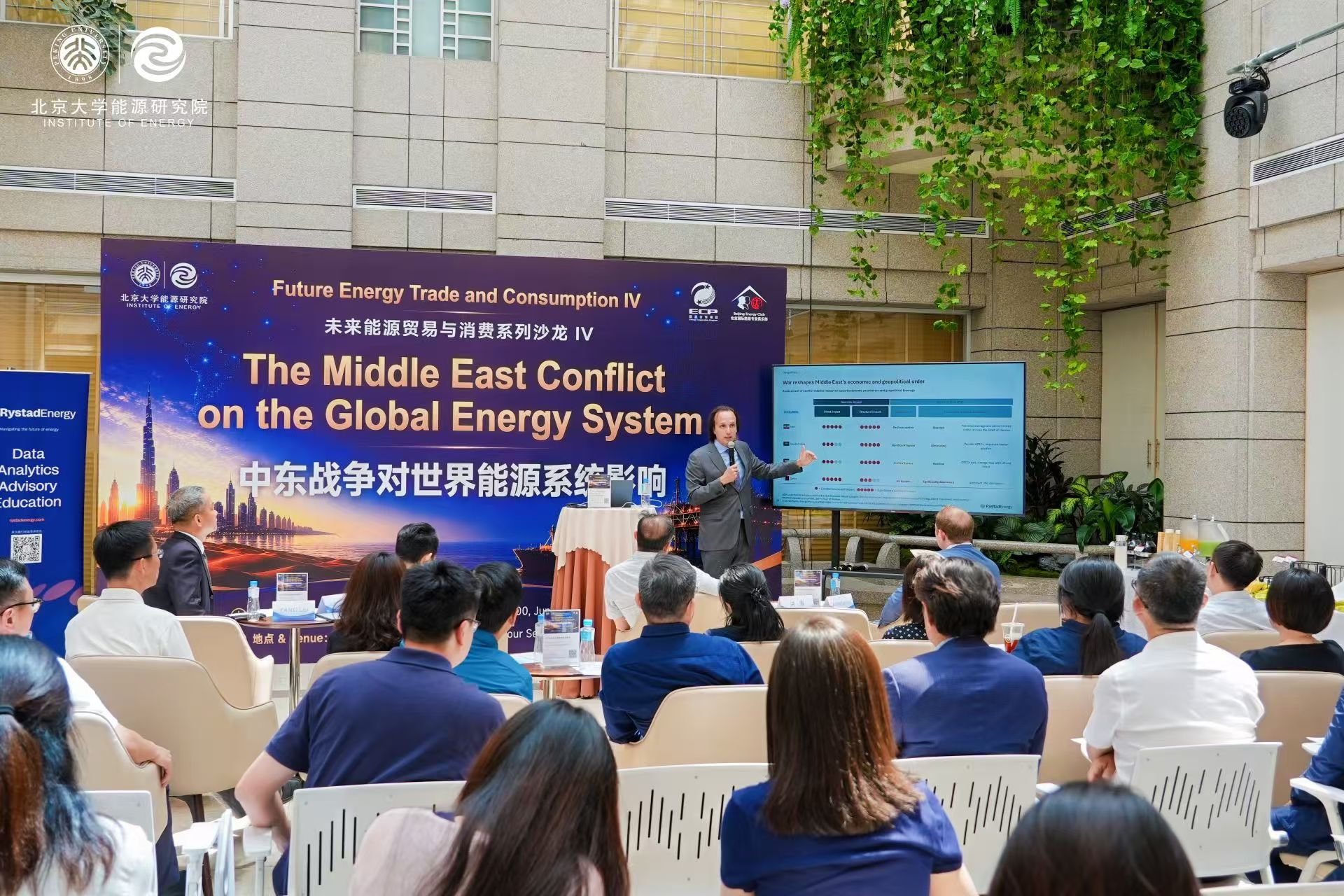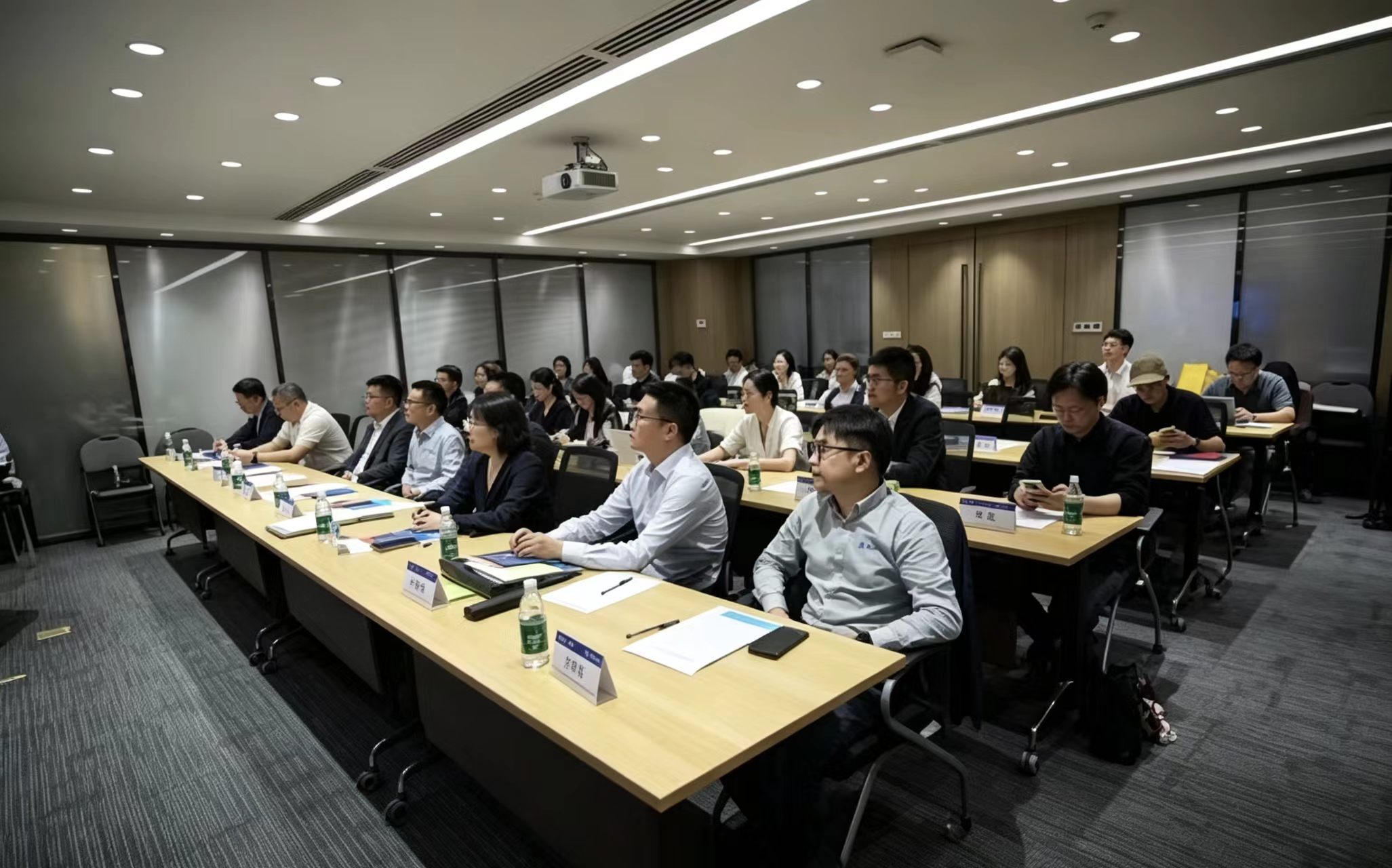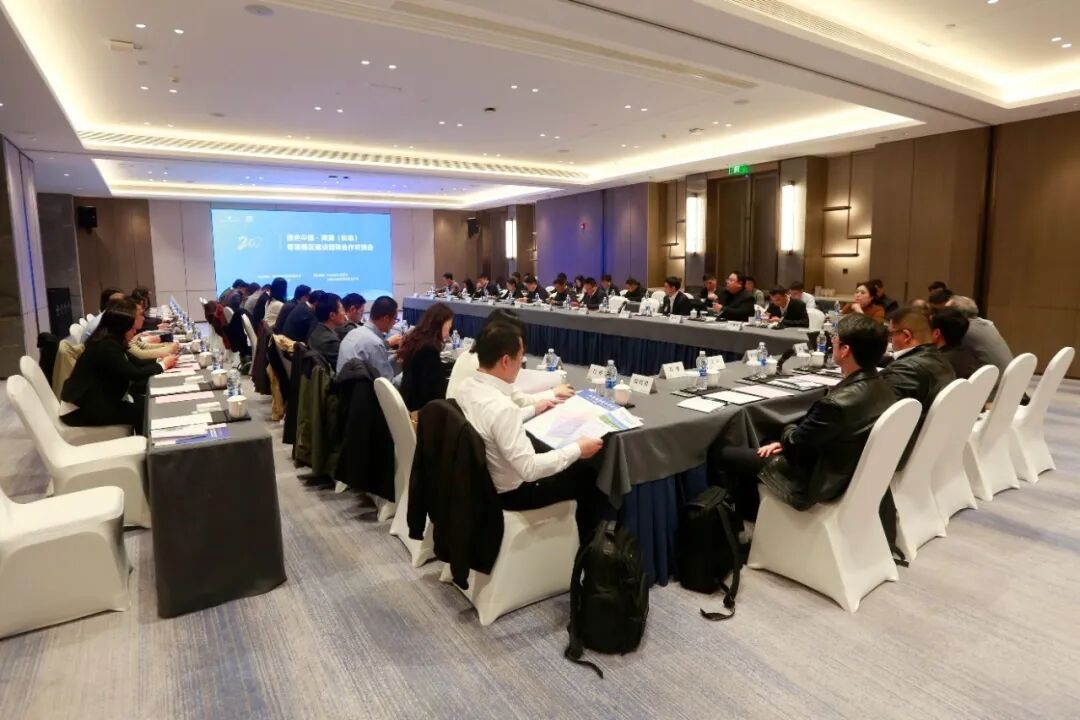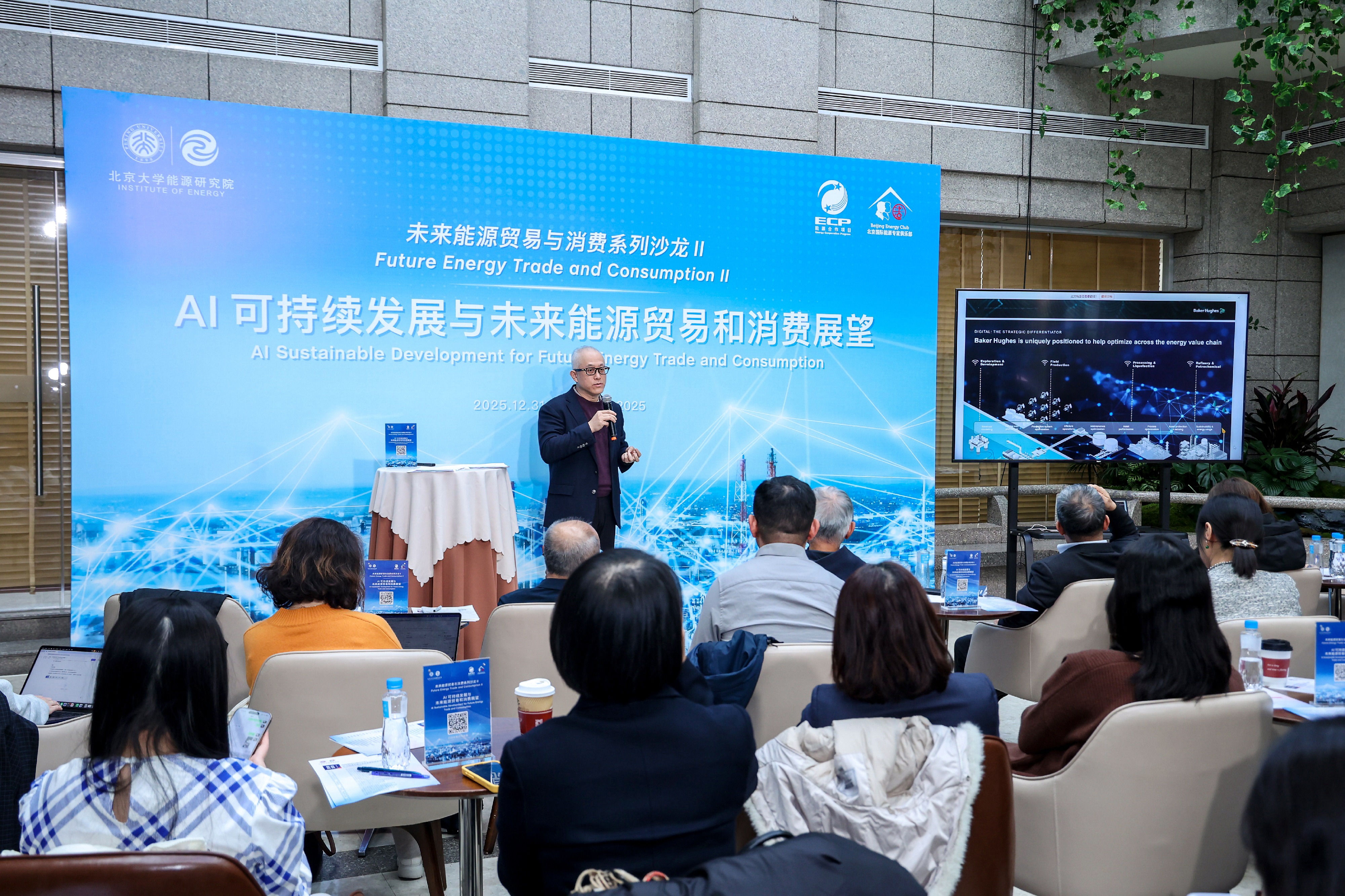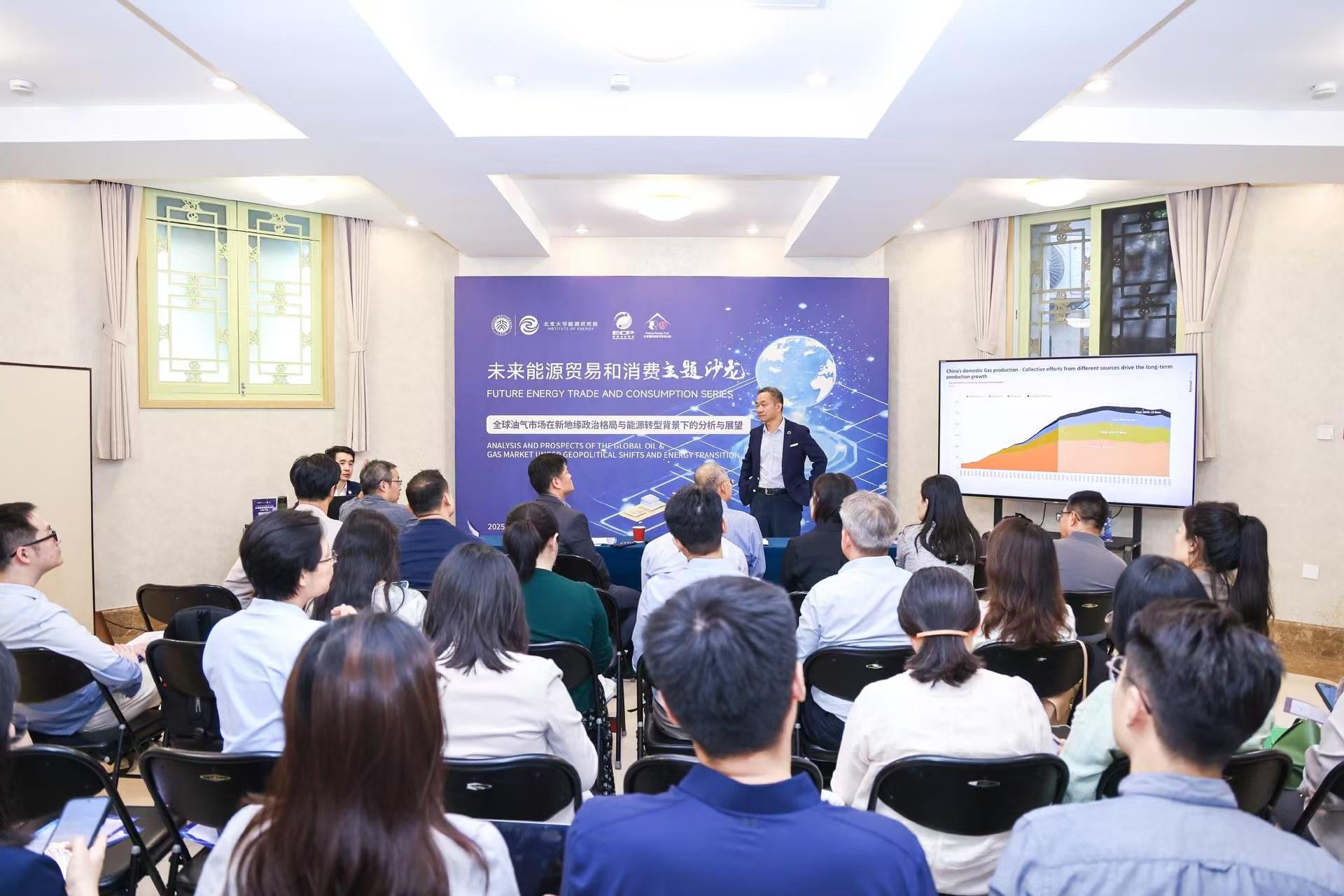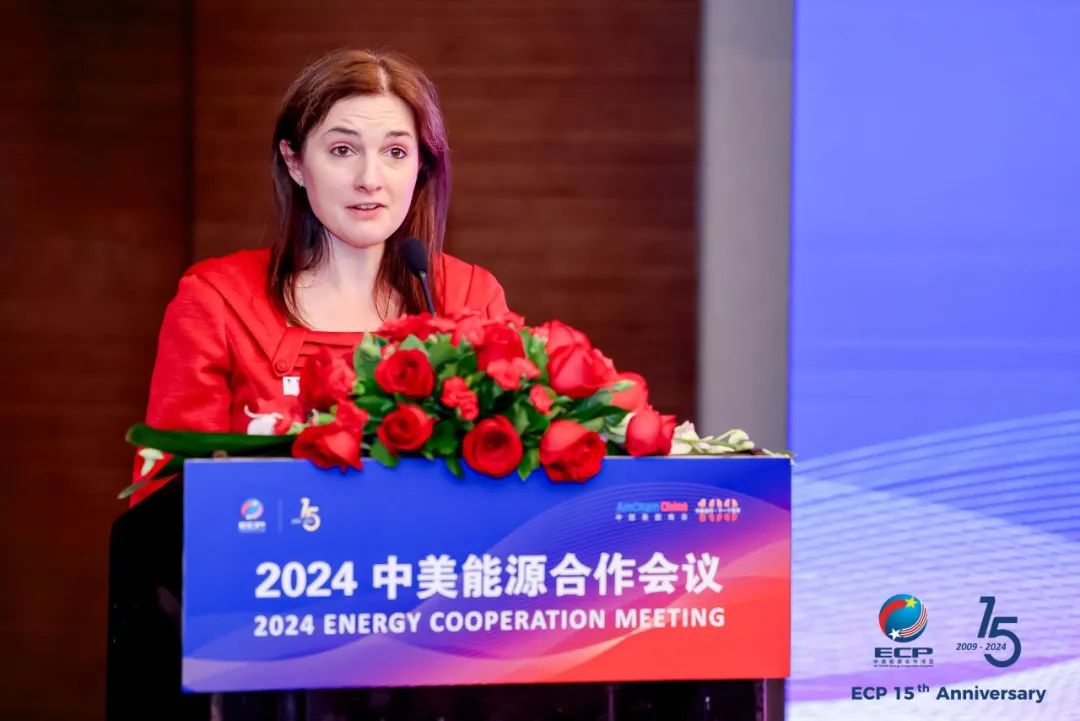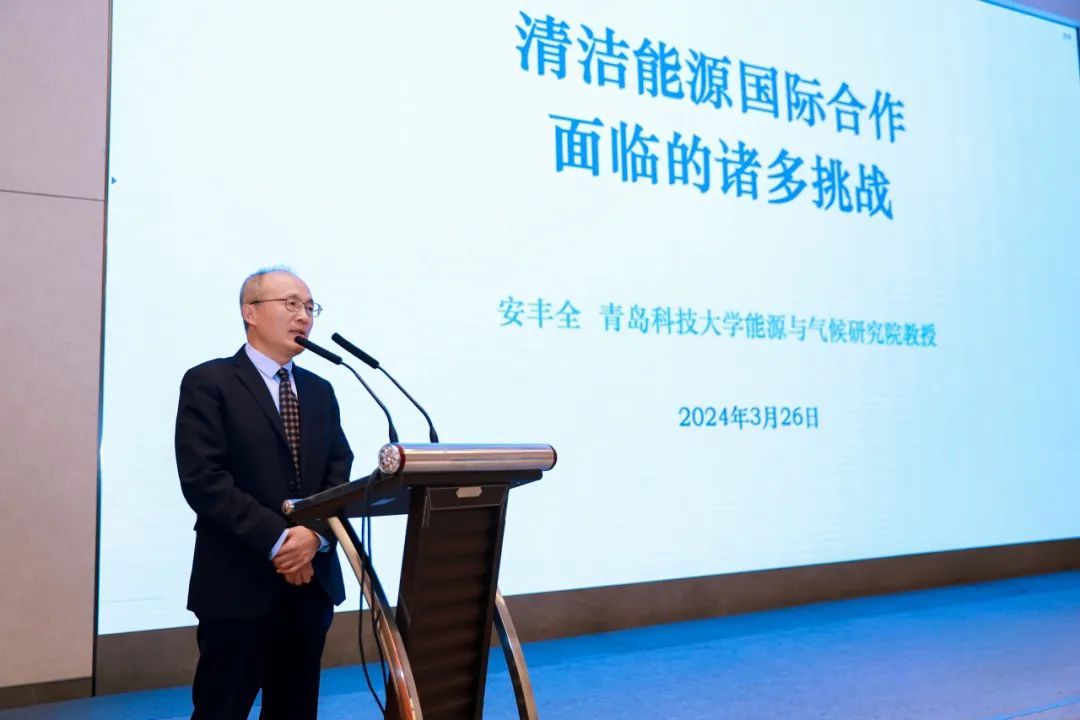
On April 15, 2026, the third session of the “Future Energy Trade and Consumption” salon series, titled “International Energy Cooperation in an Era of Geopolitical Restructuring: Corporate Challenges and Strategic Opportunities,” was successfully held at the Stanford Center at Peking University. The event was jointly organized by the Institute of Energy at Peking University (IEPKU), ECP, and the Beijing Energy Club.
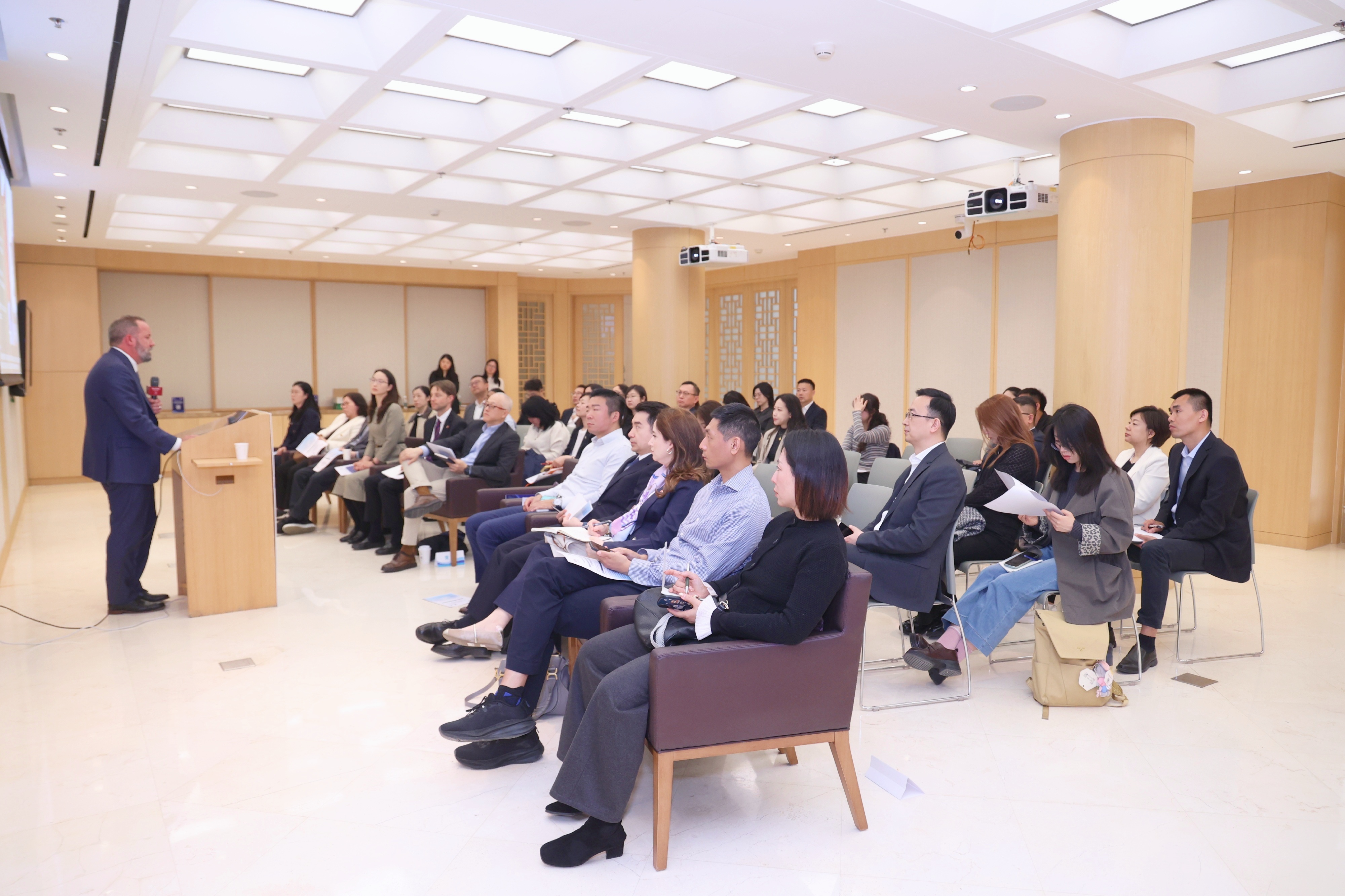
Nearly 50 representatives from government and industry, along with experts from both domestic and international energy organizations, participated in the discussion. Attendees included representatives from Baker Hughes, Cheniere, Rystad Energy, Saudi Aramco, QatarEnergy, China Petroleum Engineering & Construction Corporation, Sinochem, Kunlun Digital Technology, CNPC Economics & Technology Research Institute, foreign embassies in China, the Trade Development Bureau of the Ministry of Commerce, and the Belt and Road Promotion Center under the National Development and Reform Commission, among others. Discussions focused on geopolitical risks, compliance capability building, and pathways toward a “secure transition.” Speakers and participants shared a common perspective on “finding certainty amid uncertainty.”
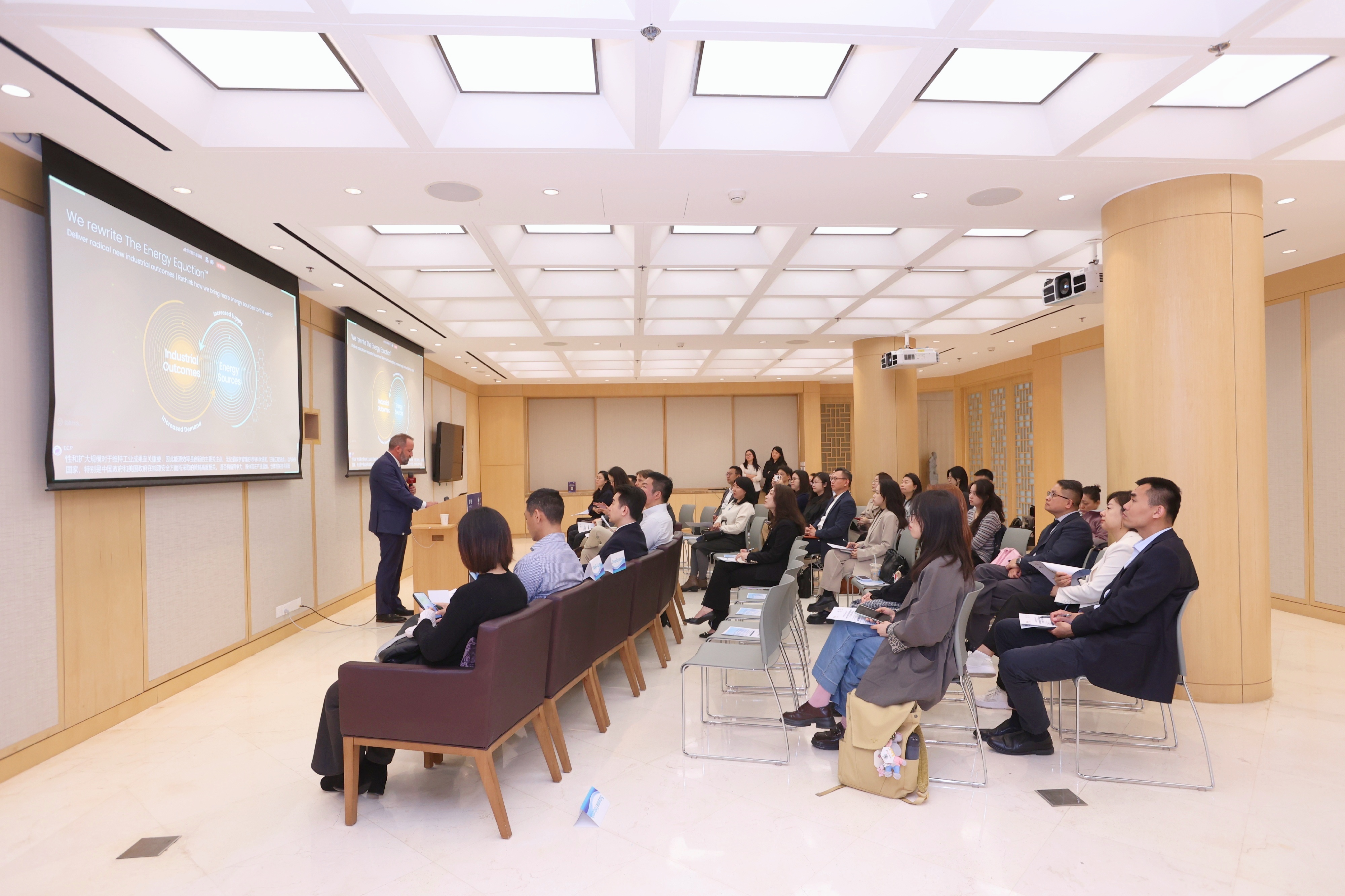
The closed-door event focused on the profound transformation of the global energy landscape, examining the compliance pressures, strategic choices, and operational realities faced by multinational energy companies. The event featured a keynote speech by Mr. Matt Armstrong, Vice President of Global Government Affairs and Public Policy at Baker Hughes. Mr. Zhu Xinlei, China Managing Director and Partner at Rystad Energy, provided expert commentary.
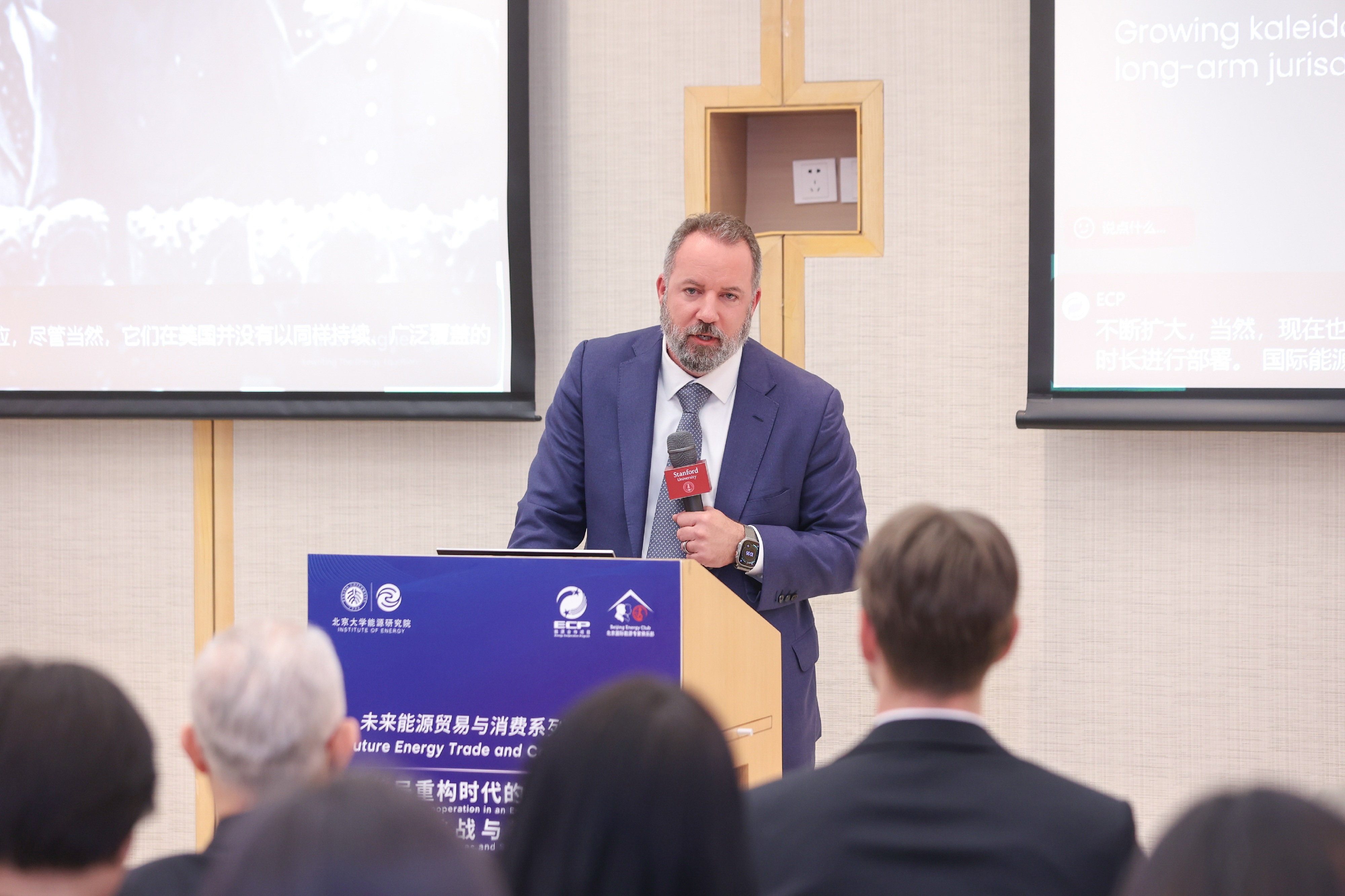
The Future Energy Trade and Consumption roundtable series will continue to focus on frontier industry topics, fostering in-depth dialogue among government, industry, and research communities, and supporting enterprises in navigating the evolving global energy landscape.